
- SEPL-06 Split Y
- SEPL-07 V Anchors
- SEPL-08 Corrugated Bullhorn Anchors
- SEPL-09 Corrugated H Anchors
- SEPL-10 Y Refractory Anchors (Flat)
- SEPL-11 Flat Sectioned Anchors
- SEPL-13 Corrugated V Round Anchors
- SEPL-14 Multipurpose Anchors
- SEPL-15 Moveable Anchors
- SEPL-16 Shear Connectors
- SEPL-17 Round Y Anchors
- SEPL-18 Strip Corrugated Anchors
- SEPL-19 Miscellaneous Anchors
SEPL Ceramic Fiber Lining Anchors
Ceramic fiber — supplied as blankets, boards, and pre-formed modules — has become the preferred lightweight insulation in high-temperature industrial furnaces because it cuts fuel consumption, withstands thermal shock, and installs faster than castable refractory. But the fiber itself has no structural strength: without the right anchoring system, linings sag, peel, or blow off under operating pressure and vibration. Santura Engineering has developed a complete range of ceramic fiber lining anchors that keep insulation firmly bonded to furnace shells, from fired heaters operating at 900 °C to reformers running near 1100 °C hot-face.
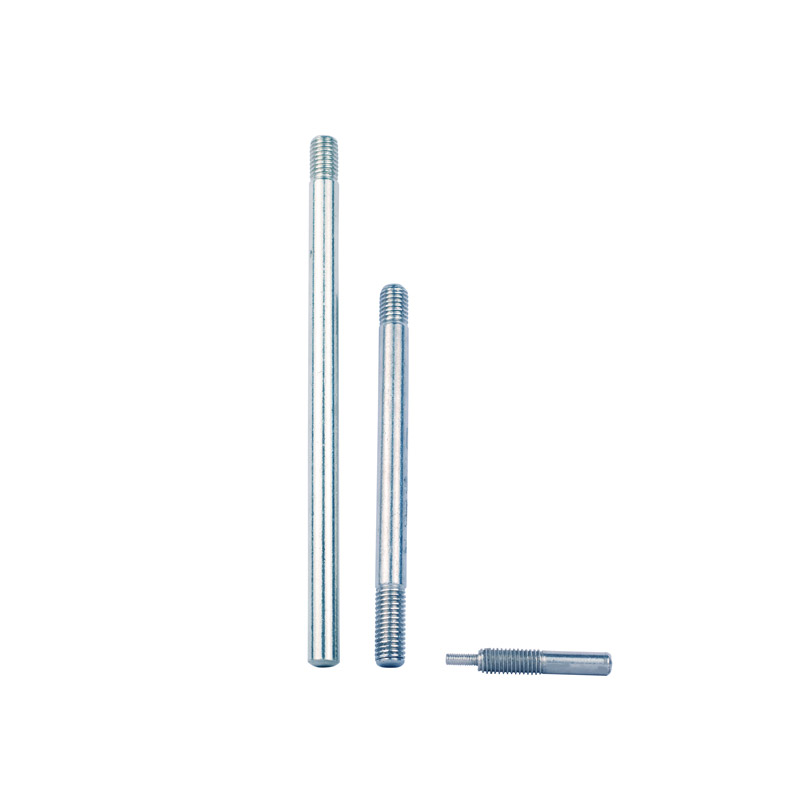
- SEPL-24 Fiber Stud Anchors
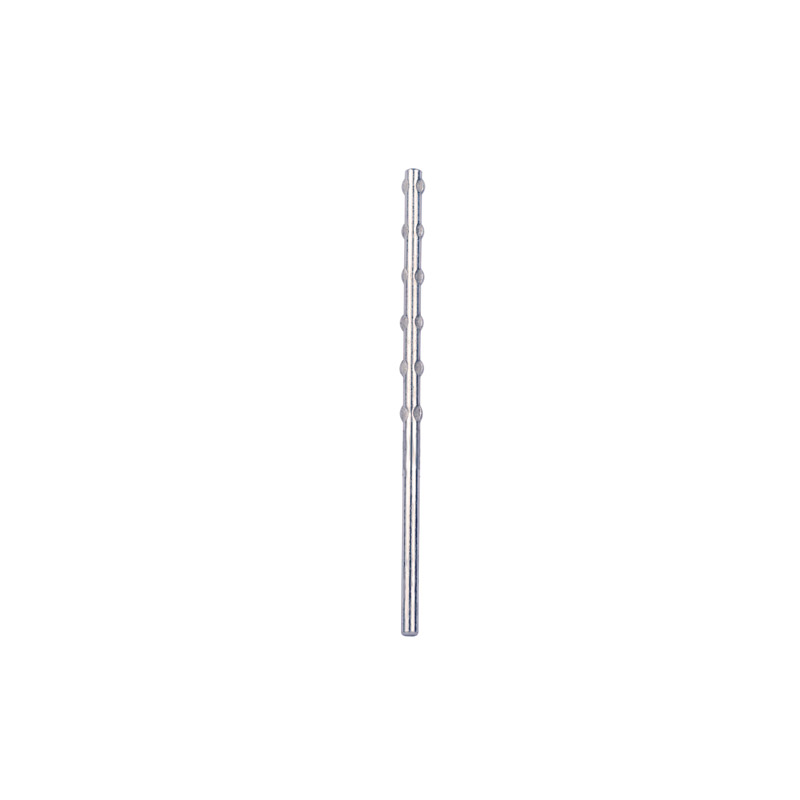
- SEPL-25 Threaded Studs (Corrugated & Smooth)
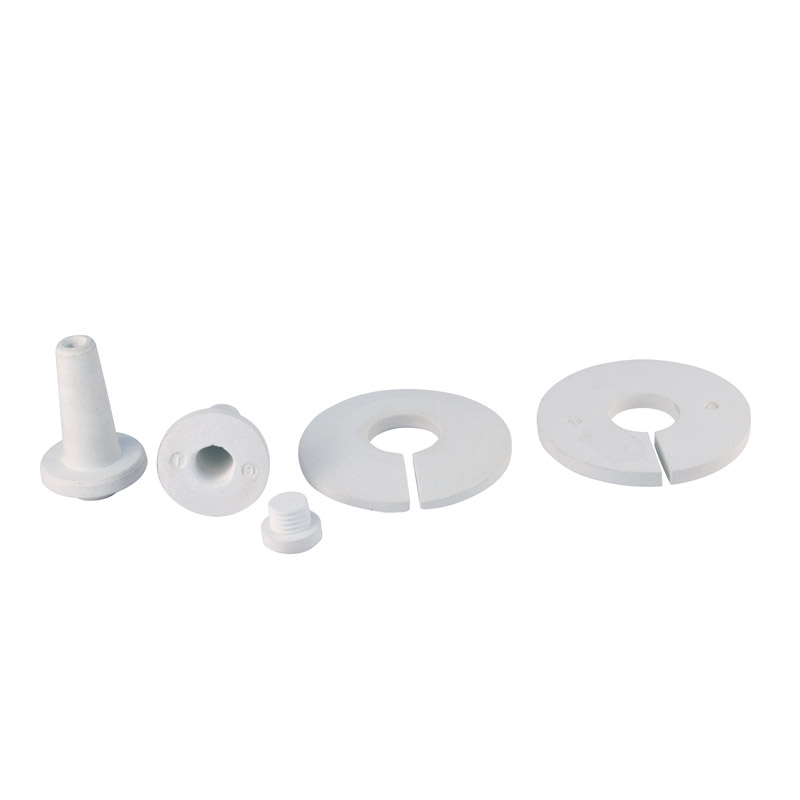
- Ceramic Ferrule Washers (SEPL-26)
Why Ceramic Fiber Lining Anchors Matter
Ceramic fiber weighs a fraction of castable refractory, which makes it ideal for reducing shell loads and speeding up maintenance turnarounds. However, that same lightness means the lining relies entirely on its mechanical fastening to the shell. In fired heaters and reformer tubes, process-side pressures, draft fluctuations, and thermal cycling all exert forces on the lining. An under-designed anchor system leads to module slippage, hot spots, and unplanned shutdowns — problems that cost far more to fix than the anchors themselves.
Santura's ceramic fiber anchor systems are engineered specifically for these conditions. We supply stud-welded fiber anchors, threaded bolt-on studs, corrugated and smooth shaft variants, and the ceramic ferrule washers that prevent heat bridging through the anchor tip — giving you a complete system rather than individual components.
Product Details
SEPL-24 — Fiber Stud Anchors
SEPL-24 Fiber Stud Anchors are straight cylindrical studs that are stud-welded directly to the furnace shell or steel casing. The flat disc head on some variants doubles as a retainer plate, locking the ceramic fiber blanket layer against the shell face. Once the stud is welded, layers of ceramic fiber blanket are pierced onto the stud, compressed, and then held in place by a ceramic ferrule washer clipped over the stud tip — creating a secure, insulated anchor point with no metal exposed to the hot gas stream.
- Alloys: SS304, SS310, Inconel 600, Inconel 800H
- Temperature range: Up to 1050 °C (SS310); up to 1150 °C (Inconel grades)
- Installation: Stud-welded to shell; no drilling required
- Applications: Fired heaters, steam reformers, ethylene crackers, tube still furnaces
- Custom lengths: Available on request to match blanket thickness
SEPL-25 — Threaded Studs (Corrugated & Smooth)
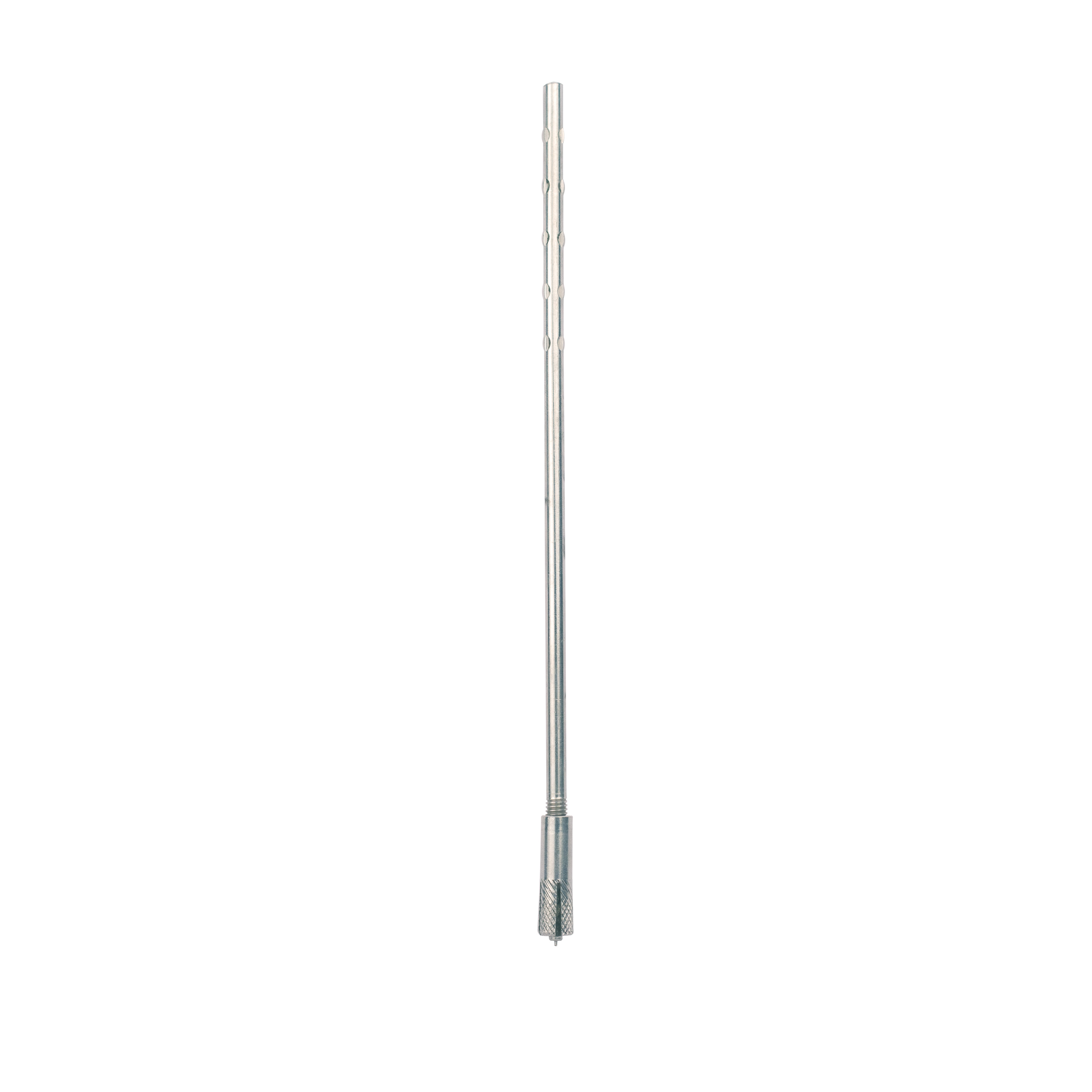
SEPL-25 Threaded Studs are used where the anchor needs to penetrate through pre-formed ceramic fiber modules rather than loose blanket. Two shaft variants are available: smooth shaft studs for standard blanket-stack installations and corrugated shaft studs where the undulating surface creates mechanical interlock with the surrounding fiber, reducing the risk of pullout under vibration or pressure surge.
The knurled tip at the exposed end (visible in image 3 above) provides additional grip on the ceramic ferrule washer, preventing it from riding up or spinning loose during operation. Studs are available in both bolt-on (threaded into a pre-welded base nut) and weld-on configurations, making them suited to both new construction and maintenance retrofits where shell access is limited.
- Variants: Smooth shaft, corrugated shaft, knurled-tip
- Fixing method: Bolt-on (M10, M12, M16 thread) or stud-welded
- Alloys: SS304, SS310, Inconel 600
- Applications: Ceramic fiber module installations, FCC unit risers, boiler duct linings, cement preheater cyclones
Ceramic Ferrule Washers (SEPL-26)
Ceramic ferrule washers are small cup-shaped ceramic components that fit over the tip of a fiber stud anchor after the insulation layers have been threaded on. Their function is thermal, not mechanical: the ceramic body breaks the conductive path between the hot-face fiber and the metal stud, preventing heat from travelling through the anchor and reaching the shell at high intensity. Without ferrule washers, metal studs act as heat bridges, creating localised hot spots on the outer shell that weaken the steel and accelerate corrosion.
- Material: High-alumina ceramic (Al₂O₃ ≥ 60%)
- Continuous service temperature: Up to 1260 °C
- Function: Thermal break at anchor tip; prevents heat bridging
- Sizes: Multiple diameters to suit SEPL-24 and SEPL-25 stud sizes
- Compatible with: All Santura fiber stud anchor sizes
Industries That Use Ceramic Fiber Lining Anchors
- Oil & Gas: Fired heaters, steam methane reformers (SMR), hydrogen plants — where anchor alloy selection must account for carburising and sulphidising atmospheres
- Petrochemical: Ethylene cracker radiant boxes, fluid catalytic cracking (FCC) unit regenerators and cyclones, process furnaces running naphtha or gas oil
- Power Generation: Coal-fired and gas-fired boiler sidewalls, duct linings, transition pieces where thermal cycling demands anchors that do not crack the surrounding fiber
- Cement: Preheater cyclone tower linings, calciner vessels, cooler hood insulation — where alkali attack resistance is a consideration alongside temperature
- Steel & Metals: Ladle preheater linings, soaking pit covers, annealing furnace doors, walking beam furnace walls
- Glass & Ceramics: Tunnel kiln car linings, roller hearth furnace insulation, shuttle kiln crown modules
Why Source Ceramic Fiber Anchors from Santura Engineering
Santura Engineering is a refractory anchor manufacturer based in Mumbai with over three decades of experience supplying anchors for high-temperature insulation systems worldwide. For ceramic fiber lining anchors specifically:
- Ready stock of SS304, SS310, and Inconel wire rod — no lead time waiting on raw material
- Custom sizes — non-standard stud lengths, thread pitches, and head geometries manufactured to drawing
- Exported to 25+ countries including UAE, Saudi Arabia, USA, Germany, Netherlands, South Korea, and Japan
- Competitive pricing vs. European and US suppliers, with no compromise on material quality
- Full material test certificates to EN 10204 3.1 — chemical composition and mechanical properties per heat
- Complete system supply — fiber studs, threaded studs, ceramic ferrule washers, and stainless steel washers all from one source
Our anchors are used alongside our stainless steel reinforcement fibres and insulating materials in complete lining systems, reducing the number of vendors a project team needs to manage.
Installation Methods for Ceramic Fiber Lining Anchors
The correct installation method depends on the type of ceramic fiber product (blanket, board, or pre-formed module) and whether the shell allows welding access. Three common approaches are used:
- Stud Welding (most common for new construction): A stud welder drives the SEPL-24 or SEPL-25 stud directly to the furnace shell in under a second, creating a full-penetration weld without heat distortion to the surrounding shell plate. Blanket layers are then impaled over the studs and secured with ceramic ferrule washers. This method allows high installation density — 600 to 900 studs per square metre on radiant box walls — and is the fastest approach for large-area linings.
- Bolt-On / Threaded Stud (for maintenance and retrofits): A threaded base pad is first welded to the shell, then the SEPL-25 threaded stud screws into the pad. This allows studs to be replaced individually if damaged, without disturbing adjacent lining panels. Ideal for areas where access is restricted and complete re-weld of studs is impractical.
- Clip-On and Push-Through Systems: In some ceramic fiber module designs, the module itself contains an embedded anchor slot. The SEPL-25 corrugated stud is pushed through a matching hole in the module and locked in place by the corrugations, which grip the ceramic fiber wall of the module aperture. No welding is needed on site — the stud-and-base-pad assembly is pre-attached to the shell, and modules are simply pushed onto the stud array.
For further guidance on anchor selection and pattern density for your specific furnace geometry, contact our technical team via the RFQ page or speak directly with our engineering team.
Related Refractory Anchor Systems
If your project also involves castable or brick-lined sections alongside the ceramic fiber zones, Santura supplies the full range of refractory anchors for concrete linings (V anchors, Y anchors, bullhorn anchors) and brick linings (brick staples, brick claws, tie-back anchors). See our SEPL-23 Slit Stud Anchors for double-lining applications and SEPL-16 Shear Connectors for structural composite lining systems.
Request a Quote for Ceramic Fiber Lining Anchors
Custom sizes, bulk orders, and fast delivery from Mumbai. Tell us your stud diameter, length, alloy grade, and quantity — we'll respond within 24 hours with pricing and availability.
Request a Quote Contact Our Team